
Blog · Virtual Assistant Hiring
Solar Company Virtual Assistants: Admin & Scheduling
See how Australian solar installers use virtual assistants for STC paperwork, scheduling & customer follow-up without hiring locally.

Prateek Sahni
Published: 31 August 2026 · 8 min read
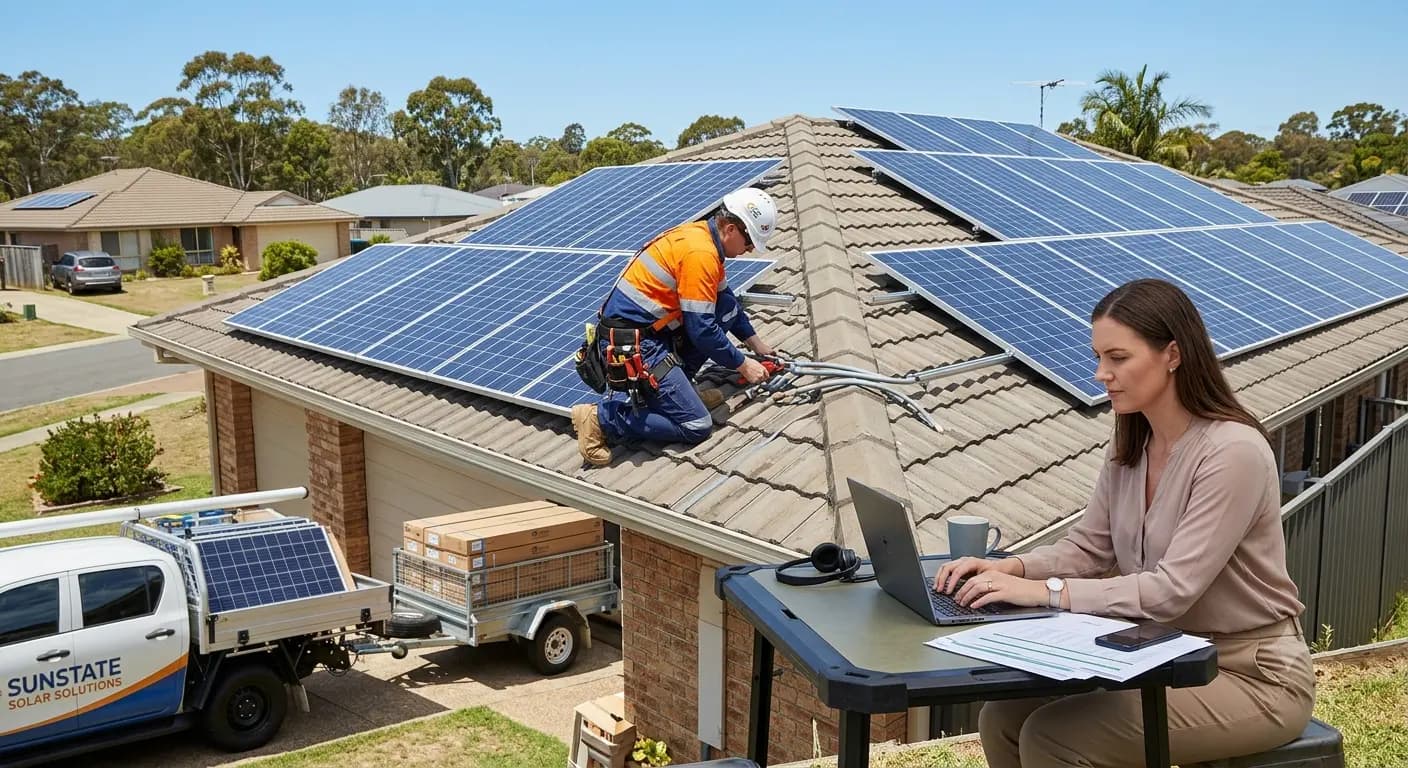
How Solar Installation Companies Are Using Virtual Assistants to Handle Permits, Scheduling and Customer Follow-Up
Ask any solar installer where their week actually disappears to, and it's rarely the roofs. It's the STC paperwork sitting half-finished. The DNSP connection application stuck waiting on one missing document. The installer who rings up asking where he's supposed to be tomorrow because the schedule shifted and nobody passed it on.
None of that needs a CEC-accredited electrician. All of it eats the hours a CEC-accredited electrician should be spending on a job.
That gap between "growing enquiries" and "growing admin capacity" is exactly why more Australian solar businesses are bringing on virtual assistants not to replace their licensed technical team, but to take the operational weight off them so the people who can legally do the work spend their day actually doing it.
The Real Bottleneck Isn't the Installers
Solar businesses rarely struggle to find work. They struggle to keep up with what comes after someone says yes.
Once a customer signs off, there's a long tail of things that need doing: collecting the right customer information, chasing outstanding paperwork, tracking where an STC claim or grid-connection request sits with the network operator, coordinating who's on site and when, keeping the CRM from turning into a mess of half-updated leads.
Handled by an electrician or a salesperson, this stuff quietly steals hours that should be going toward selling systems or installing them. Hiring another local coordinator is one way to solve it, but it comes with the full weight of Australian employment costs super, leave, payroll tax, recruitment, a desk well before that person's processed a single application. For a business running 20 or 30 jobs a month, that arithmetic doesn't always stack up.
What a Solar VA Should Handle and What They Never Touch
Here's the line, and it should stay firm: a virtual assistant supports the process. They don't make electrical decisions, sign off on compliance, or do anything that requires an Australian licence. That stays with your local, qualified team, full stop.
Everything around that work is fair game.
Preparing STC and compliance documentation, confirming customer information is complete before an application goes in, and tracking where each claim or DNSP request sits so nothing goes cold in an inbox for a week that's a natural fit for remote admin support.
So is scheduling. Coordinating installation bookings, site inspections and installer calendars means your crews aren't fielding "where am I tomorrow" calls mid-job. One dedicated person becomes the point of contact for that, and the noise around it disappears.
Quote follow-up matters more than most solar businesses give it credit for. A customer who asks for a quote today might not decide for another two weeks, and without someone tracking that, genuine interest just goes quiet. A VA can run that follow-up sequence in the CRM confirming appointments, chasing unanswered quotes, checking back in on older leads and hand anything that needs an actual conversation about system sizing or feed-in tariffs straight to the sales team.
Then there's the CRM itself. Whether it's HubSpot, Zoho or Pipedrive, it only stays useful if someone's responsible for it entering leads properly, moving jobs through stages, logging calls, cleaning out duplicates before they pile up.
And customer questions. Most of what people ask has my paperwork gone through, when's the installer arriving, what happens after commissioning doesn't need a technician on the line. A VA can be that first point of contact, escalating anything technical, and follow up after the job's done to collect reviews and confirm warranty registration is sorted.
Where the Line Sits Between Your Team and a Remote One
The advantage of working this way in Australia is that installers don't have to choose between doing everything in-house or handing over the whole operation. The split can be deliberate.
Stays with your Australian team | Moves to a remote assistant |
|---|---|
Site inspections and installs | Scheduling and installer coordination |
Electrical work and technical assessments | CRM updates and lead management |
Compliance sign-off | STC and DNSP paperwork tracking |
Customer consultations on system design | Quote follow-up and re-engagement |
On-site troubleshooting | Post-install check-ins and reviews |
Your licensed team stays focused on the work only they're allowed to do. The operational load the part that scales fastest as enquiries pick up gets carried by someone whose entire job is exactly that.
What It Actually Costs
A local admin hire in Australia comes with the full weight of employment behind it award wages, super, leave loading, payroll tax, recruitment fees, a desk to sit them at long before they've touched a single STC application.
Pricing with My Virtual Mate starts from A$9–11 an hour for a Basic Mate, which covers paperwork tracking, scheduling and data entry comfortably. Businesses needing more complex CRM management or sales support step up to the Advanced or Expert Mate tiers. Billing runs month-to-month with no lock-in contract, so a solar business can add hours ahead of a busy spring install season and pull back over winter without being stuck in a year-long agreement it doesn't need for three of those months.
Every engagement comes with a dedicated Project Manager overseeing onboarding, plus a 6-Week Performance Guarantee that keeps that oversight in place through the stretch where a poor fit is most likely to show up. And if it genuinely isn't working, a replacement gets arranged quickly, at no extra cost.
Handing Over Access Without Losing Sleep Over It
It's a fair thing to feel uneasy about giving someone on the other side of the world access to your CRM and customer records, especially with financial and personal details tied up in solar quotes.
The honest answer isn't "just trust us." Staff sign an NDA before they touch anything, access is limited to what the role actually needs a scheduler isn't in your accounting software, and someone managing your CRM isn't handling compliance files they've got no reason to see and Time Doctor tracking runs quietly in the background, capturing screenshots every three to five minutes. That's not there to feel like surveillance; it's there so you've got an actual record of what got done and when, instead of taking someone's word for it.
Setting It Up Properly
The businesses that get real value from this don't just hand over inbox access on day one and hope for the best.
Start with a short, honest list of exactly what needs handling STC applications, scheduling, quote follow-up, CRM entry. Write down roughly how each one should be done; a couple of screenshots or a short screen recording goes further than a page of instructions. Decide upfront what gets escalated and what doesn't a reschedule request is handled directly, a question about system sizing goes to the technical team. Give access only to the tools that role needs, nothing more. And track a few practical numbers from week one, like quotes followed up or CRM records updated, so it's clear the arrangement is actually working rather than just filling a headcount.
Candidates are typically shortlisted within three to five days of sharing what the role needs, with a Project Manager running the onboarding from there.
The Bigger Shift
Australia's solar industry doesn't need more people on roofs alone. It needs installers who can take on more customers without their back office buckling under the weight of it.
Splitting the licensed, technical work from the repetitive admin isn't cutting corners it's how solar businesses grow their install numbers without growing their office headcount at the same pace. The STC claims still get lodged. The schedule still gets managed. The quotes still get chased. It just isn't the electricians doing it between jobs anymore.
Ready to take some of that load off your solar business? Book a free discovery call with My Virtual Mate and see what a dedicated remote assistant could take off your plate this month.
Frequently Asked Questions
Can a virtual assistant handle STC paperwork for my solar business? They can prepare and track STC and compliance documentation, confirm customer information is complete, and chase up anything outstanding but final compliance sign-off stays with your licensed local team, since that requires Australian accreditation a VA doesn't hold.
Will a remote assistant actually understand solar-specific terms like feed-in tariffs or DNSP approvals? Yes. Staff are trained on the vocabulary and workflow of the industry they're placed in, and a Project Manager oversees onboarding to make sure that's understood before they're handling live customer files.
How quickly can I get a virtual assistant set up? Candidates are usually shortlisted within three to five days of sharing what the role needs, with onboarding managed by a dedicated Project Manager from there.
Is my customer data safe with a remote virtual assistant? Staff sign an NDA before starting, access is limited to what their role actually requires, and Time Doctor tracking with periodic screenshots gives you visibility into what's being worked on.
What happens if the virtual assistant isn't the right fit? The 6-Week Performance Guarantee keeps a Project Manager closely involved during onboarding, and if it genuinely isn't working out, a replacement is arranged quickly at no extra cost.
Do I need a long-term contract to bring on a solar VA? No billing runs month-to-month with no lock-in, which suits businesses that need extra support through peak install season and want the flexibility to scale back over winter.