
Blog · Remote Hiring
How to Outsource Social Media Management
A practical guide to outsourcing social media: what to hand over, what it costs, the three models, and how to keep it sounding like your brand.

Prateek Sahni
Published: 27 July 2026 · 13 min read
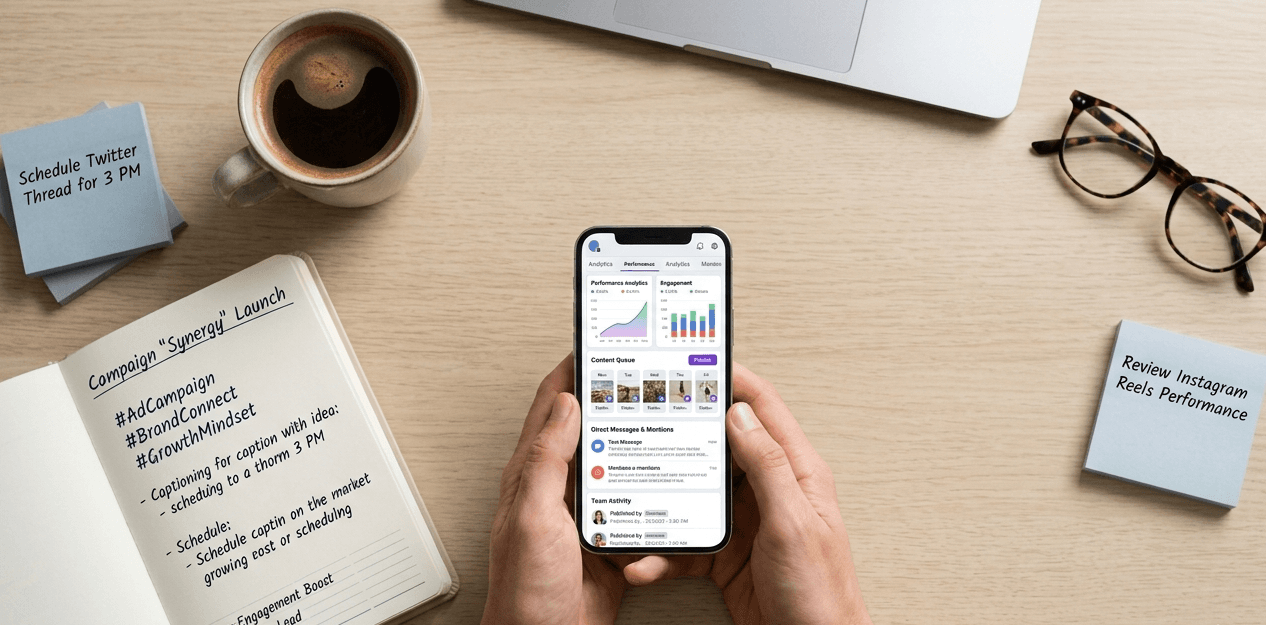
Almost every business knows it should be more consistent on social media. Far fewer manage it. Not because the strategy is hard to understand, but because staying consistent - planning, creating, posting, replying, week after week, takes more time than most owners and small teams can spare.
So the account goes quiet. A burst of posts, then two weeks of silence, then a guilty catch-up. And inconsistency is the one thing social platforms punish hardest, because their algorithms reward accounts that show up regularly and quietly bury the ones that don't.
Outsourcing social media management solves the time problem without you having to hire in-house. Someone else handles the weekly execution -the content, the scheduling, the engagement, while you keep control of the direction and the brand. This guide walks through how it actually works: what you can hand over, what it costs, how to keep it sounding like you, and how to choose the right person or team.
What does it mean to outsource social media management?
Outsourcing social media management means hiring an external person or team to run some or all of your social media, rather than doing it yourself or employing someone in-house. They handle the ongoing work - creating content, scheduling posts, monitoring comments, reporting on what's working and you stay in charge of the strategy, the brand voice, and final approval.
It's worth being clear about what it isn't. Outsourcing your social media doesn't mean handing over your brand to a stranger and hoping. The businesses that get good results stay involved: they give their assistant a clear brief, approve content until the voice is right and treat the relationship as a partnership rather than a task they've thrown over a wall. You supply the direction. They supply the consistency.
The practice is common, and increasingly so among smaller businesses. Independent surveys consistently show that social media is one of the most-used marketing channels for small businesses and also one of the most frustrating to keep up with, with time being the number one obstacle owners report. Outsourcing exists precisely because that time problem is so widespread.
Why businesses outsource social media management
Consistency is the whole game
Social platforms reward regular posting and penalize gaps. An account that posts steadily builds reach; one that goes quiet loses it. But consistency is exactly what's hardest to maintain when social media is one more thing on an already full plate. A dedicated person makes it their job rather than everyone's afterthought, which is the difference between a calendar that stays full and one that dries up in week three.
It's a real time cost and it's easy to underestimate
Estimates vary by source and business size, but research consistently puts the time small businesses spend on organic social media somewhere in the range of a few hours to ten-plus hours a week once you add up content creation, scheduling, community management and reporting. At the upper end, that's the equivalent of a part-time role, hours the owner or team isn't spending on sales, product or customers. Outsourcing converts that time back into focus.
The skill set is broader than it looks
Running social media well isn't just writing captions. It spans content planning, copywriting, graphic design, an understanding of what performs on each platform, community management, and reading the analytics to adjust. One person rarely has every part of that in equal measure in-house, but a specialist assistant does it as their core job.
It flexes with you
Need more content this quarter and less next? An outsourced arrangement scales up and down without the friction of hiring or reducing headcount. You buy the capacity you need when you need it.
What social media tasks can you outsource?
You can outsource almost the entire function or just the parts that eat the most time. The common ones:
Content planning and calendar management. Building and maintaining a content calendar, planning themes and campaigns, batching content ahead of time so nothing goes out last-minute. | ||
Content creation. Writing captions in your brand voice, designing graphics in Canva to your brand kit, sourcing and editing images, adapting content to suit each platform's format. | ||
Scheduling and publishing. Loading and scheduling posts across platforms, publishing at the times your audience is active, keeping the queue full. | ||
Community management. Monitoring and responding to comments and direct messages, flagging anything that needs your personal input, keeping the account responsive rather than a one-way broadcast. | ||
Hashtag and trend research. Researching relevant hashtags, monitoring what's working in your niche, keeping an eye on competitors. | ||
Reporting and analytics. Tracking reach, engagement and follower growth and producing a monthly summary of what worked and what to adjust, in plain language, not a raw data dump. |
You don't have to outsource all of it. Many businesses keep brand strategy and final approval in-house and outsource the execution - the planning, creating, scheduling and monitoring that takes the most time.
The three ways to outsource social media
There are three common routes and the right one depends on your budget, how much you want to hand over and how much continuity matters to you.
1. A social media agency
You hire an agency that manages your social media as a full service - strategy, content, publishing and reporting. This suits businesses that want a hands-off arrangement and are willing to pay for it. It's usually the most expensive route and the trade-off is less day-to-day visibility and an account team that may be shared across many clients.
2. A freelancer
You hire an individual freelance social media manager, usually on a monthly retainer or hourly. This can cost less than an agency and gives you direct access to one person. The risk is continuity: freelancers take holidays, get sick, juggle several clients and if they move on you're back to square one, often with your account going dark in the meantime.
3. A dedicated social media assistant
You get a dedicated person who works consistently on your account, learns your brand over time, and integrates with your workflow, much like an in-house hire, but without recruitment, benefits overhead or the cost of a full agency. This route sits between the other two: more continuity and brand familiarity than a rotating cast of freelancers, more flexibility and lower cost than an agency. A dedicated offshore assistant is often the most cost-effective version of this, giving you steady weekly capacity at a fraction of a local hire's fully loaded cost.
How to outsource social media management: step by step
Step 1 - Get clear on your goals and your voice
Before you bring anyone in, know what you want social media to do - brand awareness, engagement, lead generation, community and be able to describe your brand voice. Gather your existing content, any brand guidelines and examples of posts you like and don't like. A clear brief is the single biggest factor in whether outsourced social media sounds like you or sounds generic.
Step 2 - Decide what to keep and what to hand over
Choose which parts stay with you (usually brand strategy, positioning and final approval) and which you'll outsource (usually planning, creation, scheduling and monitoring). This shapes who you hire and how you work together.
Step 3 - Set a realistic budget
Match your budget to the scope. One dedicated assistant, a freelancer and a full agency retainer sit at very different price points. Knowing your number before you start keeps you from over-scoping or being sold more than you need.
Step 4 - Choose your model and vet carefully
Whether you go agency, freelancer or dedicated assistant, look for real examples of past work, a clear content process and someone who asks about your brand rather than launching straight into posting. Ask how they'll learn your voice and how approval will work.
Step 5 - Start with an approval loop
For the first few weeks, approve content before it goes out. This is how the voice gets calibrated, a few rounds of feedback and most good assistants lock onto your tone. Once you trust it, you can loosen the approval process and free up your own time further.
Step 6 - Agree a rhythm and measure outcomes
Set a weekly cadence - what's planned, what's publishing, what needs your input and agree on the metrics that matter to you. Track engagement, reach and growth over time rather than judging individual posts and use the monthly reporting to steer what comes next.
What does it cost to outsource social media management?
Pricing varies widely by model and scope, so treat these as reference points rather than quotes:
Dedicated offshore assistant: the most cost-effective route, typically billed hourly, so you pay for the capacity you actually use rather than a fixed retainer.
Freelancers: commonly around $300 to $3,500 per month depending on scope and experience or roughly $15 to $150 per hour, with basic posting packages at the lower end and full strategy-plus-content at the upper.
Agencies: typically $1,000 to $10,000+ per month, with most small-to-mid-sized businesses landing somewhere in the $1,000 to $3,000 range for multi-platform management.
Across independent 2026 pricing guides, most small businesses spend somewhere between $500 and $3,000 a month once content creation and management are included. The honest comparison isn't just the monthly fee, it's what still stays on your plate afterwards and how consistent the delivery is. A dedicated hourly assistant is usually the leanest option because you're paying for steady capacity rather than carrying a fixed cost through quiet months.
How to keep it sounding like you
This is the fear that stops most businesses outsourcing social media, so it's worth addressing head-on. The risk is real, badly outsourced social media sounds generic and hollow. But it's avoidable and the fix is process, not luck:
Give a proper brief. Share your existing content, brand guidelines, tone examples and the accounts you admire. The more raw material, the faster the voice locks in.
Use an approval loop at the start. Approve everything for the first few weeks. Feedback on real posts calibrates the voice faster than any brief alone.
Keep the strategy yours. Outsource the execution, not the identity. You decide what the brand stands for; they express it consistently.
Choose continuity. A dedicated person who works with you month after month learns your voice in a way a rotating cast of freelancers never will.
Done this way, outsourced social media doesn't dilute your brand, it keeps it consistently present, which is more than most businesses manage doing it themselves.
Common mistakes to avoid
Choosing on price alone. The cheapest option often means templated, generic content that does nothing for your brand. Value beats price. |
Skipping the brief. Handing someone your accounts with no guidance and expecting them to nail your voice is the fastest route to disappointment. The brief is the work. |
Outsourcing strategy along with execution. If you don't know what your social media is for, an assistant can't fix that. Sort the direction first. |
Judging individual posts instead of trends. Social media works over time. Track engagement and growth across weeks, not the performance of any single post. |
Going quiet during handover. Stay involved through the first few weeks. The businesses that disengage immediately are the ones that end up unhappy. |
Is outsourcing social media right for your business?
Outsourcing tends to make sense when social media consistently slips down your priority list, when you know what you want to say but don't have the hours to say it regularly, when you want a broad skill set rather than one stretched generalist or when the cost of a full in-house hire is hard to justify.
Keeping it in-house makes more sense when social media is central to your brand and you want tight, real-time control or when you're large enough to support a dedicated internal team.
For most growing businesses, the consistency and time saved from outsourcing outweigh the alternative, provided you brief well and stay involved.
How My Virtual Mate can help
Most guides to outsourcing social media leave you to work out the model yourself - agency, freelancer, or VA, and hope whoever you pick sticks around. At My Virtual Mate, that choice is already built in: you get one dedicated social media assistant, briefed properly on your brand from day one, who works consistently on your account rather than being shared across a roster or rotated between clients. No re-briefing a new person every few months, no waiting on an account team's spare capacity.
You get steady weekly capacity for planning, content, scheduling and engagement, a single point of contact who actually knows your brand and pricing that scales with what you use, starting from A$9/hour, final pricing confirmed on your Discovery call.
If you're weighing up how to outsource your social media, the simplest next step is a conversation about what you're trying to achieve. |
Related reading
How to Outsource SEO: A Guide for Growing Businesses - the search side of marketing, handled the same way
Outsourcing Digital Marketing: 6 Services to Hire - where social media fits in the wider marketing picture
Frequently Asked Questions
What does it mean to outsource social media management?
It means hiring an external person or team to run some or all of your social media content, scheduling, engagement and reporting, instead of doing it yourself or hiring in-house. You keep control of strategy and brand voice; they handle the weekly execution.
How much does it cost to outsource social media management?
It depends on the model. Freelancers commonly charge around $300 to $3,500 per month, agencies typically run $1,000 to $10,000+ per month and most small businesses land somewhere between $500 and $3,000. A dedicated offshore assistant billed hourly is usually the leanest option, since you pay for the capacity you use rather than a fixed retainer.
Will outsourced social media still sound like my brand?
Yes, if it's set up properly. Give a clear brief with your existing content and tone examples, use an approval loop for the first few weeks to calibrate the voice and keep brand strategy in-house. A dedicated assistant who works with you consistently learns your voice far better than a rotating cast of freelancers.
Which social media tasks should I outsource?
Most businesses keep strategy and final approval in-house and outsource the execution: content planning, creating posts, scheduling, community management and reporting. You can outsource as much or as little as suits you.
Should I hire a freelancer, an agency or a dedicated assistant?
A freelancer gives direct access but limited continuity. An agency offers a full managed service at higher cost and less day-to-day visibility. A dedicated assistant gives you continuity and brand familiarity closer to an in-house hire, with more flexibility and lower cost. The right choice depends on your budget and how much continuity matters.
How quickly can outsourced social media start working?
The setup - briefing, voice calibration, first content, usually takes a couple of weeks. Meaningful results in reach and engagement build over time, since social media rewards consistency rather than one-off bursts.