
Blog · Virtual Assistant Hiring
AI Powered Virtual Assistant: Human + AI in 2026
Human VAs using AI tools outperform both alone. Discover the hybrid model smart founders use in 2026 to save time, cut costs and scale faster.

Prateek Sahni
Published: 10 June 2026 · 13 min read
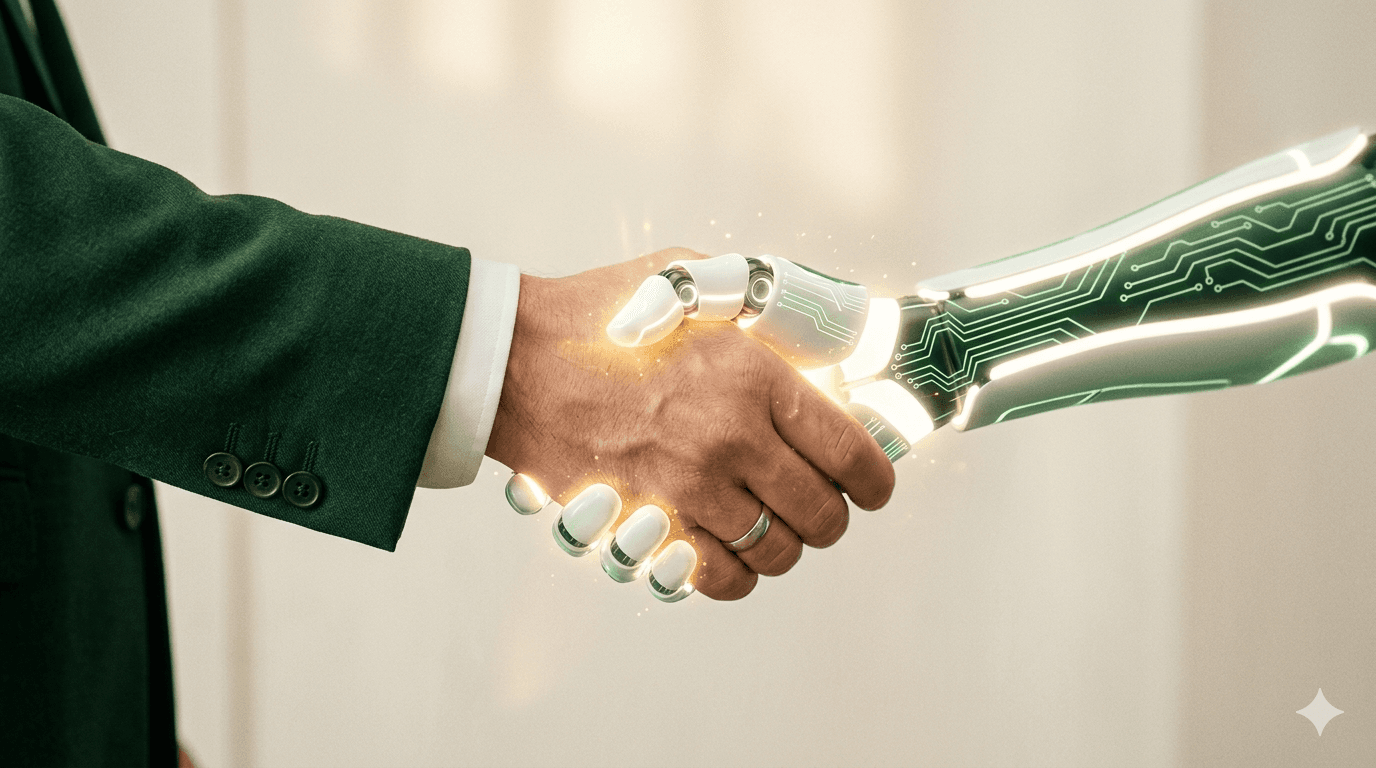
Every founder is asking the same question right now: Should I use AI tools, hire a human virtual assistant, or somehow do both? The answer - backed by 2026 data and hard-won experience across hundreds of businesses, is clearer than the market wants you to believe.
The AI vs human debate has been framed all wrong. It was never a competition. The businesses growing fastest in 2026 are not choosing between an AI powered virtual assistant and a human one. They are deploying both, with the human in the driver's seat and AI as the engine beneath them.
This guide explains exactly why, what the data shows and how to build this hybrid model for your business, without wasting time, money or trust on the wrong approach.
What Is an AI Powered Virtual Assistant And Why the Definition Matters
The term "AI powered virtual assistant" is used to describe two very different things in 2026 and confusing them is costing founders real money.
Definition 1: AI software tools (what most people think of)
This is what most articles mean when they use the phrase. ChatGPT, Microsoft Copilot, Google Gemini, software programs that respond to prompts, generate text, summarize documents and automate rule-based workflows. Powerful, fast and increasingly sophisticated. But critically: they do not think. They execute based on what you give them.
Definition 2: A human VA who uses AI tools (what actually works)
This is the model that is quietly producing the best results across thousands of businesses globally. A university-educated, professionally managed human VA with real judgment, communication skills and contextual thinking, who uses AI tools to work two to three times faster than a traditional assistant ever could.
The distinction sounds subtle. The business impact is enormous.
73% of VAs now use AI tools at least weekly in 2026 | ||
|---|---|---|
2.4× average productivity increase for AI-proficient VAs | ||
$23.8B global VA market in 2026 — still growing at 10.3% CAGR |
Sources: VA Masters Industry Statistics 2026; Wishup VA Industry Trends Report 2026; VA Masters Market Data
Why AI Alone Is Not Enough for Your Business in 2026
Let's be honest about what AI tools actually do well and where they consistently fail founders who rely on them exclusively.
What AI does brilliantly
AI virtual assistant software has genuinely transformed certain categories of work. It drafts content in seconds, summarizes long documents, pulls data from structured sources and automates repetitive workflows with near-zero error on simple, well-defined tasks. If your business runs entirely on structured, repeatable processes with no room for nuance, AI tools alone might be sufficient.
Most businesses do not work that way.
Where AI consistently fails founders
The failures tend to arrive quietly, then catastrophically. A client email that needed a warm, relationship-aware response got a technically correct but tone-deaf reply. A calendar conflict that required reading between the lines of two competing priorities got resolved the wrong way. A research brief returned plausible-sounding data that turned out to be fabricated.
AI Does This Well | ||
|---|---|---|
|
Human VA Handles This | ||
|---|---|---|
|
The pattern is consistent: AI fails at the exact moments when getting it wrong is most costly. High-stakes client communication. A sensitive internal email. A decision that requires understanding your business beyond what a prompt can convey.
AI is excellent at execution, writing, calculating, scheduling. But it is poor at strategy, negotiating, prioritizing, empathizing. The ideal is a human Virtual Assistant who uses AI to speed up their workflow.
- VA Masters Industry Research, 2026
Still running on AI tools alone?
Find out in 15 minutes whether a managed, AI-trained VA would suit your business better.
The AI-Augmented Virtual Assistant: The Model That Actually Works
The businesses generating the highest return on VA investment in 2026 are not asking whether to use AI or hire a human. They have moved past that question entirely. They are deploying what the industry now calls the AI-augmented virtual assistant model and the results are measurable.
How the hybrid model works in practice
Think of it as a two-layer system. The human VA sits at the top, owning outcomes, managing relationships and making judgment calls. AI tools sit beneath them, handling the volume, speed and repetitive execution that would otherwise consume the VA's most valuable hours.
A practical example: your VA needs to prepare a competitive research brief every Monday morning. Under a traditional model, that takes three to four hours of manual searching, reading, and formatting. Under the AI-augmented model, the VA uses AI research tools to pull and structure raw data in twenty minutes, then spends the remaining time applying genuine insight, removing inaccuracies, and tailoring the output to your exact decision-making needs. The brief is better. It takes less time. You get more value per hour.
What this looks like across real tasks
The compound impact across a week becomes significant very quickly:
Inbox Management AI triages and categorises; human VA drafts nuanced replies and manages relationships | ||
|---|---|---|
Calendar & Scheduling AI scheduling tools handle conflicts; VA applies context and priority judgment | ||
Content & Comms AI generates first drafts; VA refines tone, accuracy, and brand alignment | ||
Research AI pulls data from multiple sources; VA validates, contextualizes and synthesizes | ||
Workflow Automation VA builds Zapier and Make automations; AI executes them reliably at scale | ||
Reporting AI formats and visualizes data; VA adds narrative, flags anomalies, presents insights |
Companies using AI-augmented VA teams report between 20 and 70 per cent cost savings compared to traditional in-house staffing, depending on task complexity. One in two organizations measured efficiency gains after deploying this model. Tasks that previously took a full day now take a morning.
The AI Tools Your Virtual Assistant Should Already Be Using
Not all AI tools are equal and not every VA arrives knowing which ones matter for your business. When evaluating whether a VA service is truly AI-augmented or simply using that phrase as a marketing badge, these are the tools that indicate real competence.
The core AI toolkit for a business VA in 2026
Category | Tool | What Your VA Uses It For |
|---|---|---|
Writing & Research | ChatGPT, Claude | Drafting, summarizing, research synthesis, email templates |
Workflow Automation | Zapier, Make (Integromat) | Connecting apps, automating repetitive data flows, trigger-based tasks |
AI Scheduling | Motion, Reclaim, Clockwise | Intelligent calendar management, meeting coordination, priority scheduling |
Documentation | Notion AI, Coda AI | SOP creation, knowledge base management, meeting notes |
Design | Canva AI | Social assets, presentations, branded documents - in minutes not hours |
Communication | Otter.ai, Fireflies | Meeting transcription, action item extraction, follow-up drafting |
The VAs who have mastered this toolkit are not just faster, they are fundamentally more valuable. The productivity gap between an AI-proficient VA and a traditional assistant is already 2.4x in 2026. By 2028, that gap is projected to widen to four or five times. Hiring a VA who is not trained on these tools today is hiring yesterday's model at today's price.
What this means when choosing a VA service
The question to ask any VA provider is not "do your VAs use AI?", everyone claims that now. The question is: Which specific tools are they trained on, how was that training assessed and who quality-checks the output? Vague answers to specific questions are your signal to walk away.
At My Virtual Mate, every VA is university-educated and managed to Australian quality standards, including hands-on competency in the tools above, with a QA review process built around the outputs that matter most to your business.
AI Only vs Human Only vs AI-Augmented VA: The Honest Comparison
Before you make a hiring or tooling decision, here is the side-by-side reality that most service providers do not want to show you clearly.
Factor | AI Tools Only | Human VA Only | AI-Augmented Human VA |
|---|---|---|---|
Speed of execution | Very fast | Standard | Fast + accurate |
Judgment & context | None | Strong | Strong |
Client communication | Risky | Excellent | Excellent |
Error accountability | None, you own it | Human accountable | Human accountable |
Setup time | Hours to days | Days to weeks | Hours (managed service) |
Scalability | Instant | Requires re-hiring | Flexible, on-demand |
Cost vs in-house staff | Low subscription | Up to 78% savings | Up to 78% savings + higher output |
Long-term ROI | Diminishes without human oversight | Good | Highest |
The data speaks clearly: the AI-augmented human VA model wins on almost every metric that matters to a growing business. It is not a compromise between two approaches. It is a genuinely superior third option.
How to Get an AI-Augmented Virtual Assistant Without the Trial and Error
Building this model from scratch, hiring a VA, training them on the right tools, setting up quality assurance and managing the relationship, takes most founders between three and six months to get right. Some never do. The friction of finding, vetting, and onboarding a VA who is genuinely competent across AI tools is exactly where the time and money get lost.
The three things most founders get wrong
1. Hiring for AI claims rather than AI competency. In 2026, every VA lists "ChatGPT" on their profile. That tells you nothing. What matters is whether they can build a Zapier automation from a brief, produce a research document that doesn't hallucinate and quality-check their own AI-generated work before it reaches you.
2. No lock-in traps them into the wrong VA. Many founders commit to long-term contracts before they understand whether the VA is actually delivering. The result is months of underperformance they cannot exit without penalty.
3. Skipping quality assurance. When AI is involved in the workflow, QA becomes more important, not less. AI tools produce confident-sounding errors. Without a human review layer, either by the VA themselves or by a managed service, those errors reach your clients, your operations and your reputation.
What a properly managed AI-augmented VA service looks like
At My Virtual Mate, the model is built around exactly these failure points. Every Virtual Assistant is university-educated, assessed for AI tool proficiency and managed against Australian quality standards, with a QA review process built into delivery, not bolted on afterwards. There are no recruitment fees, no lock-in contracts and 24/7 availability across our global talent network spanning the Philippines, India, Pakistan and Bangladesh.
You get the output of an AI-augmented professional without the months of trial, error and onboarding overhead it takes to build that capability yourself.
You Didn't Start an Accounting Firm to Chase Invoices and Do Data Entry.
Free guide: The 12 admin tasks draining your accounting firm's billable hours and how to delegate them to an AI-trained virtual assistant this week. No lock-in. No recruitment fees.
Is AI Actually Replacing Virtual Assistants? The Honest Answer
This is the question every founder is quietly worried about. The short answer, backed by actual 2026 market data, is no and the trajectory is moving firmly in the opposite direction.
The numbers do not support replacement
The global virtual assistant services market is projected to reach $23.8 billion in 2026, up from $19.6 billion in 2025, representing sustained growth of over 10 per cent annually. The human VA workforce has grown by 20 to 30 percentage points across all business sizes since 2022. These are not the numbers of an industry being replaced by AI. They are the numbers of an industry being supercharged by it.
The reality playing out across the market is more nuanced: AI is replacing the parts of a VA's job that were least valuable to begin with. The mechanical, rule-based, zero-judgment tasks that previously consumed hours of a VA's day are now handled in minutes by AI tools. This frees the human VA to do more of the work that actually creates business value, the work only a human can do.
The "AI operator" shift
The role of the virtual assistant in 2026 has evolved. The best VAs are no longer just assistants, they are what the industry is beginning to call AI operators: professionals who understand how to configure, prompt, quality-check and iterate on AI tools to produce reliable, business-grade output. That is a skill set that did not exist five years ago. It is now the most valuable thing a VA can bring to your business.
A human using AI will replace a human who doesn't. That shift is already underway and the gap between AI-proficient and non-proficient VAs is widening every quarter.
Frequently Asked Questions
What is an AI powered virtual assistant?
An AI powered virtual assistant is either a software program (like ChatGPT or Copilot) that automates tasks using artificial intelligence, or more powerfully, a human virtual assistant who uses AI tools to deliver faster, higher-quality work. In 2026, the most effective model is the latter: a university-educated human VA who leverages AI to work 3x faster and deliver accountable, judgment-based output.
Can AI replace a human virtual assistant?
No. AI excels at repetitive, structured tasks but lacks the judgment, empathy and contextual thinking required for client communication, relationship management and complex decision-making. The global human VA market has grown by 20–30 percentage points across all business sizes since 2022, despite rapid AI advancement. AI is upgrading the role, not replacing it.
What AI tools do virtual assistants use in 2026?
Top AI tools for virtual assistants in 2026 include ChatGPT and Claude for writing and research, Zapier and Make for workflow automation, Motion and Reclaim for AI scheduling, Notion AI for documentation and Canva AI for design. Virtual Assistants trained across these tools deliver significantly more output per hour with a 2.4x productivity advantage over non-AI-proficient assistants.
Is a human VA or AI virtual assistant software cheaper?
AI software tools have low monthly subscription costs but require significant time investment to set up, prompt correctly and quality-check. A human VA using AI tools costs more upfront but delivers accountable, judgment-based output and companies using AI-augmented VAs report 20-70% cost savings compared to traditional in-house staffing, with far higher output quality than AI tools alone.
How do I get an AI powered virtual assistant for my business?
The most effective approach is to hire a managed VA service where assistants are already trained on leading AI tools and quality-checked by experienced managers. My Virtual Mate provides university-educated VAs managed to Australian standards, available 24/7, with no lock-in contracts and no recruitment fees, so you get human judgment and AI speed from day one.
The Bottom Line
The AI vs human assistant debate was always a false choice. The businesses winning in 2026 are not picking sides, they are deploying human expertise and AI capability together, in a model that produces better output, faster, at a fraction of traditional staffing cost.
The question is not whether to use AI. The question is whether you want to spend the next six months building that capability yourself or whether you want it working in your business this week.
My Virtual Mate exists to make the answer to that question simple. University-educated Virtual Assistants, managed to Australian standards, trained on the AI tools that matter, with no lock-in and no recruitment fees. Available when you need them, scaled to what you need.
Ready to see what an AI-augmented VA can do?
Book a free 15-minute consultation. No pitch. Just a clear answer to whether this is right for your business.